
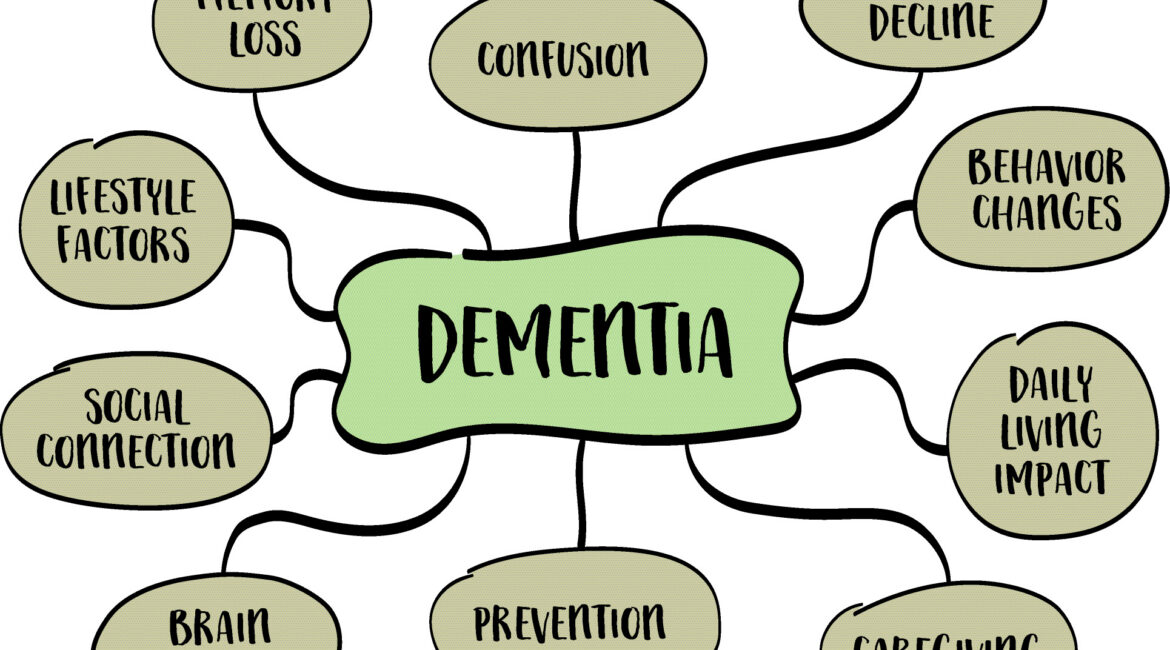
The phone call, the doctor’s visit, the quiet drive home afterward. Whether the diagnosis was Alzheimer’s disease, vascular dementia, Lewy body dementia, or another form of cognitive decline, the moment you hear the words, your world shifts. There is grief, there is fear, and beneath both of those, often a pressing question that no one quite knows how to ask out loud:
What are we supposed to do now?
At Fratello Law, we work with families throughout Long Island — from Smithtown and Stony Brook in Suffolk County to Syosset, Jericho, and Plainview in Nassau County — who are navigating exactly this situation. And while there is no legal document that can stop the progression of dementia, there is a set of steps that can protect everything your loved one has worked for, preserve their dignity and their wishes, and give your family a clear path forward.
This checklist is designed to walk you through those steps. Some feel urgent. Some feel long-term. All of them matter — and the earlier you begin, the more options you have.
If you are facing a dementia diagnosis in your family and don’t know where to start, contact Fratello Law today for a consultation. We serve families across Long Island from our offices in Smithtown and Syosset.
Why the First Weeks After a Diagnosis Are So Important
Dementia is a progressive condition. In the early stages, a person living with dementia may have full legal capacity — meaning they can understand what they are signing, whom they are trusting, and what decisions they are making. That window matters enormously.
Many of the most powerful legal tools available to your family — powers of attorney, healthcare proxies, trusts — can only be properly executed while a person retains legal capacity. Once cognitive decline reaches a point where a court determines that capacity is gone, the options narrow significantly. Instead of a family member stepping into a pre-designated role, you may be looking at a formal guardianship proceeding in New York State Surrogate’s Court, which is expensive, time-consuming, and emotionally difficult for everyone involved.
The weeks and months immediately following a diagnosis are, counterintuitively, often the best time to take action. Your loved one can still participate meaningfully in these decisions. They can still say, “I want my daughter to make healthcare decisions for me,” or “I want my assets protected in a trust.” Acting now honors that voice before it becomes harder to hear.
Checklist Item #1: Meet with an Elder Law Attorney — Immediately
The very first step on this list is not a document. It is a conversation.
An elder law attorney is not the same as a general estate planning attorney or a real estate lawyer. Elder law is a specialized field focused on the legal and financial challenges that come with aging — Medicaid planning, long-term care, asset protection, guardianship, and the intersection of all of these. If your loved one has received a dementia diagnosis, you need an attorney who understands this landscape deeply.
At your initial consultation, a qualified elder law attorney will help you:
- Assess what documents currently exist — Does your loved one have a will? A power of attorney? A healthcare proxy? Are these documents current and properly executed under New York law?
- Evaluate legal capacity — This is a legal question, not just a medical one. An experienced elder law attorney can work with you to determine whether your loved one currently has the capacity to execute new documents and move quickly if they do.
- Understand the long-term care landscape — What does care actually cost in Nassau and Suffolk County? How is it typically paid for? What does Medicaid cover, and what doesn’t it cover?
- Identify assets and plan strategically — What does your loved one own? What is at risk? What can be protected, and how?
- Create a roadmap — A good elder law attorney will leave you with a clear action plan, not just general information.
Many families in Smithtown, Stony Brook, Syosset, and throughout Long Island make the mistake of waiting — hoping the diagnosis is wrong, hoping things stabilize, hoping there’s more time. We understand that impulse completely. But in our experience, the families who act early almost always have more options and better outcomes than those who wait for a crisis.
Fratello Law offers elder law consultations at our Smithtown and Syosset offices. Schedule your consultation here or call us today. We serve families throughout Nassau and Suffolk counties.
Checklist Item #2: Execute the Four Essential Legal Documents
If your loved one currently has legal capacity — even in the early stages of dementia — there are four documents that should be executed as quickly as possible. Together, they form the legal foundation for managing every dimension of your loved one’s life if and when they are no longer able to manage it themselves.
1. Durable Power of Attorney (POA)
A power of attorney is a legal document that designates a trusted person — called an agent or attorney-in-fact — to handle financial matters on your loved one’s behalf. This includes managing bank accounts, paying bills, filing taxes, managing investments, applying for benefits like Medicaid, making gifts, and handling real estate transactions.
The word “durable” is critical. A durable power of attorney remains valid even if the person who signed it later loses mental capacity. A non-durable power of attorney becomes void the moment capacity is lost — which is exactly when you need it most.
In New York, a statutory short form power of attorney exists, but it must be signed and notarized with specific formalities to be valid. It can also include a “Modifications” section that expands the agent’s powers beyond the defaults — including the ability to make gifts, create trusts, and engage in Medicaid planning. For families facing a dementia diagnosis, having these expanded powers in place is essential.
Without a valid durable power of attorney, if your loved one loses capacity, no one — not a spouse, not an adult child — has automatic legal authority to manage their financial affairs. The family would need to go to court to have a guardian appointed, a process that can take months and cost $15,000 or more.
With a valid durable power of attorney, the designated agent can step in immediately, manage finances, apply for Medicaid, and take protective action — without court intervention.
Learn more about Powers of Attorney in New York on our website.
2. Health Care Proxy
A health care proxy designates a trusted person to make medical decisions if the person with dementia is no longer able to communicate or make decisions on their own. In New York, this document is called a Health Care Proxy, and the designated decision-maker is called a health care agent.
The health care proxy goes into effect only when a physician determines that the patient lacks capacity to make their own medical decisions. Until that point, your loved one retains the right to make their own healthcare choices.
The health care agent should be someone who understands your loved one’s values, can communicate clearly with medical professionals, and is willing to advocate firmly when necessary. This is often a spouse or adult child, but it does not have to be. It must be someone your loved one trusts.
Without a health care proxy, medical providers look to New York’s surrogate decision-making law — which establishes a list of who can make decisions and in what order. This process can lead to delays, family conflicts, and decisions that may not reflect what your loved one would have wanted.
3. Living Will
A living will — sometimes called an advance directive — is a written statement of your loved one’s wishes about end-of-life medical care. It addresses questions like:
- Do they want CPR if their heart stops?
- Do they want to be placed on a ventilator?
- Do they want a feeding tube if they can no longer eat on their own?
- What level of treatment do they want if there is no reasonable hope of recovery?
A living will speaks directly in your loved one’s voice, even when they can no longer speak for themselves. It removes an enormous burden from family members who might otherwise have to make these devastating decisions without guidance — and it reduces the likelihood of family conflict during an already painful time.
In New York, a living will works hand in hand with the health care proxy. Together, they give your loved one’s health care agent both the authority and the clear instructions needed to advocate effectively.
4. Last Will and Testament
A last will and testament determines what happens to your loved one’s assets after they pass away. It names beneficiaries, designates an executor to manage the estate, and — if there are minor children or grandchildren — can name a guardian.
Many families already have wills, but a dementia diagnosis is an important trigger for reviewing and potentially updating an existing will. Life circumstances change. Children grow up. Relationships shift. Laws change. A will that was written fifteen years ago may no longer reflect your loved one’s actual wishes or family situation.
It is also worth noting that a will has no power over assets that pass by beneficiary designation (like IRAs and life insurance) or by joint ownership — those assets pass directly, outside of the will entirely. Part of a comprehensive legal review after a dementia diagnosis should include a review of how all assets are titled and who is designated as the beneficiary on each account.
Learn more about our Estate Planning Services.
Checklist Item #3: Understand How New York Medicaid Can Cover Long-Term Care Costs
One of the most pressing questions families face after a dementia diagnosis is a practical one: How do we pay for care?
The costs of long-term care on Long Island are substantial. In Nassau and Suffolk counties, nursing home care typically runs $20,000 to $25,000 per month. Twenty-four-hour home care can reach $8,000 to $10,000 per month. Even a home health aide for eight hours a day can cost $5,000 to $6,000 per month.
Very few families can sustain those costs for years — and dementia, on average, progresses over many years. This is why Medicaid planning is one of the most important legal conversations you can have following a dementia diagnosis.
What Is New York Medicaid?
Medicaid is a joint federal and state program that provides health coverage for people with limited income and resources. In New York, Medicaid covers a wide range of long-term care services, including:
- Nursing home care — Full coverage of skilled nursing facility costs for eligible individuals
- Home and community-based services — Through programs like Consumer Directed Personal Assistance Program (CDPAP) and Managed Long Term Care (MLTC), Medicaid can fund home-based care that allows individuals to remain in their homes or in the community
- Adult day programs — Daytime supervision and social programming
- Assisted living supports — Through certain Medicaid waiver programs
For Long Island families, New York Medicaid can mean the difference between preserving a lifetime of savings and watching everything evaporate in just a few months of nursing home bills.
What Are the Eligibility Requirements?
New York Medicaid has both income and asset eligibility requirements. For 2026:
- Asset limit: $33,038 for an individual applying for long-term care Medicaid. Some retirement assets, like IRAs, 401(k) s, and annuities, are exempt.
- Income: For Community Medicaid (home-based care), there is a monthly income limit of $1,836. Importantly, exceeding this limit does not mean automatic disqualification. Instead, a person with income above $1,800 must contribute their excess income — called Net Available Monthly Income, or NAMI — toward the cost of their care before Medicaid pays the remainder. A pooled income trust (discussed below) can help manage NAMI for community Medicaid recipients.
- Nursing home Medicaid: A nursing home resident must contribute essentially all of their income toward their care (except a $50 personal needs allowance), and Medicaid covers the balance.
What About the Spouse? Understanding Community Spouse Protections
If your loved one is married, New York Medicaid has important protections for the spouse who remains at home — called the community spouse. Under the Community Spouse Resource Allowance (CSRA), the community spouse may keep up to $162,660 in assets (2026) without those assets affecting Medicaid eligibility for the nursing home spouse. The community spouse also retains the right to their own income.
New York also recognizes a strategy known as spousal refusal, which can provide additional protection beyond the standard CSRA. In a spousal refusal, the community spouse formally refuses to make their assets and income available to pay for the institutionalized spouse’s care. When properly executed and filed with the county Department of Social Services, this refusal can allow the nursing home spouse to qualify for Medicaid while the community spouse retains assets above the normal CSRA limit. Spousal refusal is a nuanced tool that requires careful legal guidance and is not appropriate in every situation. An experienced elder law attorney can evaluate whether it makes sense for your family.
These spousal protections are designed to prevent the “well” spouse from being left impoverished. But navigating them correctly requires careful legal planning — particularly around how assets are titled and what transfers have been made.
The Five-Year Lookback Period
Here is one of the most important things to understand about Medicaid planning: Medicaid reviews all financial transfers made in the five years before an application is filed. This is called the lookback period.
If your loved one transferred assets — gave money to children, moved assets into a family member’s name, made charitable gifts — within that five-year window, Medicaid will assess a penalty period during which benefits are withheld. The penalty is calculated based on the amount transferred divided by the average monthly cost of nursing home care in New York.
This is why timing matters so much. The sooner a family begins Medicaid planning, the more likely it is that protective transfers will be safely outside the lookback window when care is eventually needed.
If your family is thinking about Medicaid planning after a dementia diagnosis, contact Fratello Law to discuss your options. We help families throughout Smithtown, Syosset, and across Long Island navigate Medicaid planning at every stage.
Learn more about New York Medicaid Planning for Long-Term Care.
Checklist Item #4: Protect Assets with a Medicaid Asset Protection Trust (MAPT)
For many Long Island families, a Medicaid Asset Protection Trust — commonly called a MAPT — is the single most powerful tool available to protect assets from the costs of long-term care.
What Is a MAPT?
A MAPT is an irrevocable trust into which a person transfers assets — typically their home, savings, or other property — with the goal of protecting those assets from Medicaid’s asset count and from Medicaid estate recovery after death.
Here is how it works in practice:
- Your loved one (or you, if you are planning for your own future) transfers assets into the MAPT.
- The trust is managed by a trustee — typically an adult child or other trusted family member.
- The person who created the trust gives up ownership of the assets, but typically retains the right to income generated by the trust and, for a home, the right to continue living there.
- After five years — once the transferred assets are safely outside the Medicaid lookback window — those assets are fully protected from Medicaid’s asset count.
- When the person passes away, the assets in the trust pass directly to the named beneficiaries, without Medicaid estate recovery and without going through probate.
Why a MAPT Is Especially Important After a Dementia Diagnosis
Dementia is a disease with a long trajectory. The average person lives eight to twelve years after a diagnosis of Alzheimer’s disease, though this varies significantly. This means that a family who begins planning today — even at the time of diagnosis — may well get those assets fully protected within the five-year window before nursing home care is needed.
Consider an example that reflects what we commonly see in our practice:
Dorothy and Frank, a couple in their early 70s living in Smithtown, learn that Frank has early-stage Alzheimer’s. Their home is worth $650,000 and they have approximately $300,000 in savings. They consult with an elder law attorney and establish a MAPT, transferring the home into the trust. Frank is healthy enough to still need only home care, which they manage privately for several years. By the time Frank’s care needs escalate to the nursing home level — five years after the MAPT was established — the home is fully protected. Medicaid covers Frank’s nursing home costs. Dorothy keeps her community spouse allowance and her own income. After Frank and Dorothy pass, the house goes directly to their children.
Without the MAPT — or without acting in time — that $650,000 home could have been subject to Medicaid estate recovery, forcing the family to sell it to reimburse the state.
What a MAPT Does Not Do
It is important to be clear about what a MAPT cannot do:
- It cannot protect assets transferred into it within five years of a Medicaid application. The lookback period applies.
- It is irrevocable — meaning the person who creates it generally cannot take the assets back or change the terms after the fact. This requires careful consideration and planning before execution.
- It does not replace a will, power of attorney, or healthcare proxy. It works alongside those documents as part of a comprehensive plan.
Is It Too Late?
One of the most common things we hear from families is: “We should have done this sooner. Is it too late?”
The honest answer is: it depends — but it is rarely too late to do something. Even after a dementia diagnosis, there may still be planning opportunities. Crisis Medicaid planning, spousal protections, pooled income trusts, and other strategies can still preserve meaningful assets even when the five-year window has closed. The key is to talk to an experienced elder law attorney who knows which options remain open in your specific situation.
Do not assume nothing can be done. Call and find out.
Checklist Item #5: Consider a Pooled Income Trust for Community Medicaid
If your loved one’s income exceeds Medicaid’s monthly limit of approximately $1,836 (2026) but they need home-based care through Community Medicaid, a pooled income trust may be an essential tool.
A pooled income trust is managed by a non-profit organization. Each beneficiary has their own account within the pool, but funds are managed collectively. Each month, your loved one’s excess income — the Net Available Monthly Income (NAMI) above the Medicaid limit — is deposited into the trust. The trust then disburses those funds to pay for legitimate living expenses: rent or mortgage, utilities, food, transportation, insurance premiums, and more.
This arrangement allows your loved one to “spend down” their excess income on real needs — rather than simply paying it to Medicaid — while qualifying for home-based care benefits.
Important: Pooled income trusts apply to Community Medicaid only. They are not available for nursing home Medicaid, which operates under different income rules. This is a nuance that matters significantly, and it is one reason why working with a specialized elder law attorney is so important.
Checklist Item #6: Review All Assets, Titling, and Beneficiary Designations
A comprehensive legal review after a dementia diagnosis should include a careful review of how each asset is owned and who will receive it.
This matters for several reasons:
Jointly owned assets pass automatically to the surviving co-owner at death, regardless of what a will says. This can create problems if the plan was for assets to be distributed differently.
Beneficiary designations on retirement accounts (IRAs, 401(k)s), life insurance policies, and annuities control who inherits those assets — and they override the will entirely. A beneficiary designation listing a deceased person or a minor child can create serious complications.
Medicaid implications of asset titling are significant. How assets are titled affects what counts against the Medicaid asset limit, what can be transferred into a MAPT, and what is subject to estate recovery.
Common issues we find during these reviews include:
- Retirement accounts with outdated beneficiaries (a deceased parent, or no contingent beneficiary)
- Bank accounts jointly held with children in ways that create gift tax or Medicaid complications
- Real estate titled only in the name of the person with dementia, making transfer difficult without a valid power of attorney
- Life insurance policies with no clear estate plan coordination
Review every account, every policy, and every deed. Update what needs to be updated. This is housekeeping that can save significant money and family conflict later.
Checklist Item #7: Have the Family Conversation
Legal documents are only part of the picture. Equally important — and often more emotionally difficult — is making sure the people who will carry out your loved one’s wishes actually understand what those wishes are.
This means having direct, honest conversations about:
- Where your loved one wants to receive care — At home? In an assisted living community? In a nursing facility? These preferences matter and can inform your long-term planning.
- Who will serve in which roles — Who is the power of attorney agent? Who is the health care proxy? Do those people know they have been named? Are they willing and able to serve?
- What your loved one wants at the end of life — Have they discussed their wishes with their health care agent? Are those wishes documented in the living will?
- Who will manage day-to-day caregiving — Legal planning and caregiving are different responsibilities. Both need to be organized.
- Family communication — If there are multiple siblings, establishing clear communication protocols early can prevent conflict later. Who is the primary point of contact? How will decisions be shared?
These conversations are hard. We know that. But having them early — while your loved one can still participate — is one of the most meaningful gifts a family can give each other.
Checklist Item #8: Explore Long-Term Care Insurance and Veterans’ Benefits
Before turning entirely to Medicaid, it is worth exploring two other potential sources of long-term care funding:
Long-Term Care Insurance
If your loved one has a long-term care insurance policy, a dementia diagnosis may trigger eligibility for benefits. Most policies require that the insured be unable to perform a certain number of activities of daily living (ADLs) or have a cognitive impairment diagnosis. Review the policy carefully and, if eligible, file a claim promptly — benefits are not retroactive.
If your loved one does not have a policy, it is generally too late to purchase one after a diagnosis (insurers will deny the application). For adult children reading this for their own future planning, this is an important lesson: long-term care insurance should be explored in your 50s or early 60s, before health issues make it unavailable.
VA Aid & Attendance Benefits
If your loved one is a veteran — or the surviving spouse of a veteran — they may be eligible for the VA’s Aid & Attendance benefit, which provides a monthly payment to help cover the cost of personal care.
Many Long Island families in communities like Smithtown, Kings Park, Stony Brook, Syosset, and Plainview are unaware that a parent or grandparent’s military service may entitle them to significant benefits. It is always worth asking.
Checklist Item #9: Plan for Guardianship — and How to Avoid It
If your loved one receives a dementia diagnosis and does not have a valid power of attorney or health care proxy in place — or if they have already progressed beyond the point of legal capacity — your family may eventually need to seek guardianship through the courts.
In New York, guardianship is governed by Article 81 of the Mental Hygiene Law. A court can appoint a guardian to manage a person’s finances, their personal care, or both, if the court determines that the person lacks capacity to manage those areas and that a guardian is necessary.
Guardianship provides important protections for vulnerable adults. But it is also:
- Expensive — Legal fees for a guardianship proceeding can range from $10,000 to $20,000 or more
- Time-consuming — The process can take several months
- Ongoing — Guardians must file annual reports with the court
- Potentially contentious — Family members may disagree about who should serve, leading to contested proceedings
The best way to avoid guardianship is to execute a valid power of attorney and health care proxy while your loved one still has capacity. This is why acting quickly after a diagnosis matters so much.
If guardianship is unavoidable in your situation, an elder law attorney can guide you through the process, help you understand what powers the court is likely to grant, and ensure the proceeding moves as efficiently as possible.
Quick Reference: The Dementia Diagnosis Legal Checklist
Here is a summary of the steps covered in this guide:
✅ Meet with an elder law attorney immediately — before capacity becomes an issue
✅ Execute a durable power of attorney — with Medicaid planning powers included
✅ Execute a health care proxy — designating a trusted healthcare decision-maker
✅ Execute a living will — documenting end-of-life care wishes
✅ Update or create a last will and testament — reflecting current wishes and family situation
✅ Understand New York Medicaid — eligibility, what it covers, and the five-year lookback
✅ Explore a Medicaid Asset Protection Trust (MAPT) — to protect home and savings from long-term care costs
✅ Consider a pooled income trust — if income exceeds Medicaid’s limit for community home care
✅ Review asset titling and beneficiary designations — update anything outdated or problematic
✅ Have the family conversation — wishes, roles, caregiving responsibilities, communication
✅ Explore long-term care insurance and VA benefits — existing policy claims and Aid & Attendance
✅ Plan to avoid guardianship — or navigate it if it becomes necessary
Can a person with dementia still sign legal documents?
Yes — in many cases. Legal capacity is not an all-or-nothing concept, and an early dementia diagnosis does not automatically mean someone lacks the capacity to execute legal documents. The legal standard for executing a power of attorney, will, or trust is that the person understands what they are signing, what it means, and who is involved. Many individuals in the early stages of dementia fully meet this standard. An elder law attorney can work with your family to assess capacity and move quickly while the window remains open.
What happens if my parent already has dementia and there is no power of attorney?
If your loved one has lost legal capacity and there is no power of attorney in place, someone will need to seek guardianship through the New York courts. This is a formal legal proceeding under Article 81 of the Mental Hygiene Law. It is more expensive and time-consuming than having a power of attorney executed in advance, but it does provide a legal mechanism for family members to manage the affairs of a person who can no longer do so themselves. Contact an elder law attorney to discuss your options.
Can we still do Medicaid planning after a dementia diagnosis?
Yes. A diagnosis does not close the door on Medicaid planning — in many cases, it opens it. If your loved one still has legal capacity, they can participate directly in the planning. If not, a properly authorized agent under a durable power of attorney may be able to take certain planning steps on their behalf. The specific options depend on your loved one's health, assets, and current care needs. An elder law attorney can evaluate what is still available and help you make the most of the time you have.
How long does it take for assets in a MAPT to be protected?
Assets transferred into a Medicaid Asset Protection Trust become fully protected from Medicaid's asset count and from estate recovery after five years — the length of the Medicaid lookback period. This is why early action is so important. A family that acts at the time of diagnosis may have assets fully protected well before nursing home care is needed. A family that waits until a nursing home admission is imminent will not have that same opportunity.
What is the difference between a pooled income trust and a special needs trust?
A pooled income trust is used to manage excess income for individuals who qualify for Community Medicaid but whose monthly income exceeds the $1,836 limit (2026). A special needs trust (sometimes called a supplemental needs trust) is designed to hold assets for a person with disabilities without disqualifying them from Medicaid, SSI, or other means-tested benefits. These are different legal tools that serve different purposes, though they are sometimes confused. An elder law attorney can help you determine which, if either, is appropriate for your situation.
Is it too late for Medicaid planning if my parent is already in a nursing home?
Not necessarily. While the five-year MAPT strategy may no longer be available, there may still be meaningful planning opportunities — including spousal protections, certain exempt asset strategies, and potentially planning for the surviving spouse's estate. Every situation is different. Call an elder law attorney and describe your specific circumstances before assuming nothing can be done.
What should I bring to my first elder law consultation?
If possible, bring: any existing legal documents (will, power of attorney, health care proxy, trust documents), a list of all assets and how they are titled (bank accounts, retirement accounts, real estate, life insurance), any existing long-term care insurance policies, information about monthly income (Social Security, pension, retirement account distributions), and — if your loved one is already receiving care — documentation of current care costs and providers. The more information you can share, the more useful your consultation will be.
You Do Not Have to Navigate This Alone
A dementia diagnosis changes everything. But it does not have to mean chaos, financial devastation, or your loved one’s wishes going unheard. With the right legal plan in place — executed while there is still time — families throughout Long Island can face this journey with clarity, protection, and peace of mind.
At Fratello Law, we have helped hundreds of families in Nassau and Suffolk counties — from Smithtown, St. James, and Stony Brook to Syosset, Jericho, Plainview, and beyond — through exactly this process. We understand the urgency. We understand the emotion. And we know how to build a legal plan that works.
Whether you are at the beginning of this journey or already deep in it, we are here to help. Contact Fratello Law today to schedule an elder law consultation at our Smithtown or Syosset office. Do not wait for a crisis to act. The time to plan is now.
Related Resources
- New York Medicaid Planning for Long-Term Care — Fratello Law
- Understanding Powers of Attorney in New York — Fratello Law
- Estate Planning Services — Fratello Law
- Alzheimer’s Association: Legal and Financial Planning — alz.org
- New York State Department of Health: Medicaid — health.ny.gov
- NYS Medicaid Reference Guide — health.ny.gov
- VA Aid & Attendance and Housebound Benefits — va.gov
- New York Courts: Article 81 Guardianship — nycourts.gov
- IRS: Gift Tax Information — irs.gov
This blog post is intended for general informational purposes only and does not constitute legal advice. Every family’s situation is unique. Please consult with a qualified elder law attorney to discuss your specific circumstances. Fratello Law, P.C. is an elder law and estate planning firm serving Nassau and Suffolk counties on Long Island, New York.
Type your paragraph here